🔒 Access restricted
These projects are confidential. Please enter the access key provided to you.
Prepared for Tristan Armstrong
From Insight to Structured Action
Translating behavioural insights into a predictive patient support framework for HER2+ metastatic breast cancer care.
February 2026
Prepared for Tristan Armstrong
From Insight to Structured Action
Translating behavioural insights into a predictive patient support framework for HER2+ metastatic breast cancer care.
February 2026
Prepared for Tristan Armstrong
From Insight to Structured Action
Translating behavioural insights into a predictive patient support framework for HER2+ metastatic breast cancer care.
February 2026



Introduction
Your recent research investment has surfaced important behavioural signals around the lived experience of Enhertu treatment, particularly fatigue and its wider impact on daily life.
As part of our commitment to delivering not just insights, but meaningful next steps, we have translated these findings into a structured support framework designed to strengthen patient confidence, reduce decision stress, and integrate seamlessly with existing initiatives.

Introduction
Your recent research investment has surfaced important behavioural signals around the lived experience of Enhertu treatment, particularly fatigue and its wider impact on daily life.
As part of our commitment to delivering not just insights, but meaningful next steps, we have translated these findings into a structured support framework designed to strengthen patient confidence, reduce decision stress, and integrate seamlessly with existing initiatives.
What we learned
What We Now Understand
What We Now Understand
Across social listening and digital insights research, several consistent patterns emerged:
Across social listening and digital insights research, several consistent patterns emerged:
Fatigue is the most frequently discussed and disruptive side effect.
Fatigue is the most frequently discussed and disruptive side effect.
Patients describe cyclical energy fluctuations, often intensifying mid-cycle.
Patients describe cyclical energy fluctuations, often intensifying mid-cycle.
Patients describe cyclical energy fluctuations, often intensifying mid-cycle.
Brain fog compounds physical fatigue and affects daily functioning.
Brain fog compounds physical fatigue and affects daily functioning.
Brain fog compounds physical fatigue and affects daily functioning.
Dose reductions and temporary pauses are discussed as quality-of-life strategies.
Dose reductions and temporary pauses are discussed as quality-of-life strategies.
Dose reductions and temporary pauses are discussed as quality-of-life strategies.
Peer communities are actively filling emotional and practical support gaps.
Peer communities are actively filling emotional and practical support gaps.
Many patients consciously negotiate treatment around important life milestones.
Many patients consciously negotiate treatment around important life milestones.
Many patients consciously negotiate treatment around important life milestones.
These patterns reveal not just symptom burden, but predictable behavioural inflection points.
The research identified
Three Structured Opportunity Pathways
The research surfaced three areas where structured activation could meaningfully improve patient support.
The research surfaced three areas where structured activation could meaningfully improve patient support.
1
Treatment - Life Synchronisation Framework
Supporting patients at predictable fatigue-related decision moments to strengthen continuity and confidence.
Treatment-Life Synchronisation Framework
Supporting patients at predictable fatigue-related decision moments to strengthen continuity and confidence.
2
Biomarker Literacy & Category Clarity
Reducing confusion around evolving HER2 classifications and preparing the market for future expansion.
Biomarker Literacy & Category Clarity
Reducing confusion around evolving HER2 classifications and preparing the market for future expansion.
3
Structured Peer Support Optimisation
Translating organic coping behaviours observed in community settings into formalised support pathways.
Structured Peer Support Optimisation
Translating organic coping behaviours observed in community settings into formalised support pathways.
The research identified
Three Structured Opportunity Pathways
The research surfaced three areas where structured activation could meaningfully improve patient support.
1
Treatment-Life Synchronisation Framework
Supporting patients at predictable fatigue-related decision moments to strengthen continuity and confidence.
2
Biomarker Literacy & Category Clarity
Reducing confusion around evolving HER2 classifications and preparing the market for future expansion.
3
Structured Peer Support Optimisation
Translating organic coping behaviours observed in community settings into formalised support pathways.
Based on both research findings and recent discussions, we see 1: Treatment-Life Synchronisation Framework as the most immediate and structurally actionable focus.
Based on both research findings and recent discussions, we see 1: Treatment-Life Synchronisation Framework as the most immediate and structurally actionable focus.
Behavioural Signal Identified
Fatigue Has Become a Decision Driver
Fatigue Has Become a Decision Driver
The research clearly demonstrates that fatigue and related adverse events are not simply symptoms to be managed, they actively influence treatment decisions. Patients are making real-world trade-offs in response to these moments:
Adjusting or pausing treatment
Planning life events around expected fatigue
Negotiating dose changes
Managing anxiety amplified by brain fog
We now recognise the language patients use in these moments.
We understand the emotional signals that precede disruption.
And we can see the predictable patterns that follow.
This shifts fatigue from a side-effect conversation to a behavioural inflection point.
The research clearly demonstrates that fatigue and related adverse events are not simply symptoms to be managed, they actively influence treatment decisions. Patients are making real-world trade-offs in response to these moments:
Adjusting or pausing treatment
Planning life events around expected fatigue
Negotiating dose changes
Managing anxiety amplified by brain fog
We now recognise the language patients use in these moments.
We understand the emotional signals that precede disruption.
And we can see the predictable patterns that follow.
This shifts fatigue from a side-effect conversation to a behavioural inflection point.
Our support opportunity
Move From Reaction to Anticipation
Move From Reaction to Anticipation
While every patient journey is personal, the research reveals consistent behavioural patterns beneath the individuality. We can now:
While every patient journey is personal, the research reveals consistent behavioural patterns beneath the individuality. We can now:
Anticipate predictable moments of stress
Anticipate predictable moments of stress
Define the types of support required at those moments
Define the types of support required at those moments
Identify where current resources fall short
Identify where current resources fall short
Predict the actions likely to follow disruption
Predict the actions likely to follow disruption
This creates a lowest common denominator framework, not to standardise patients, but to structure support around moments we know will arise.
“Patients are not simply managing fatigue ... they are negotiating treatment alongside life.”
The Treatment-Life Synchronisation Model below outlines the interconnected pillars to be mapped and coordinated to enable proactive, in-the-moment support.
This creates a lowest common denominator framework, not to standardise patients, but to structure support around moments we know will arise.
“Patients are not simply managing fatigue ... they are negotiating treatment alongside life.”
The Treatment-Life Synchronisation Model below outlines the interconnected pillars to be mapped and coordinated to enable proactive, in-the-moment support.
Interconnected pillars of the
Treatment-Life Synchronisation Model
The following pillars represent the interconnected components that should be considered and mapped together to move from reactive management to predictive support.
Interconnected pillars of the
Treatment-Life Synchronisation Model
The following pillars represent the interconnected components that should be considered and mapped together to move from reactive management to predictive support.
An operational shift
What This Framework Enables
If operationalised, this framework allows you to:

Anticipate predictable fatigue-related decision moments rather than respond after disruption

Reduce unplanned treatment pauses linked to quality-of-life trade-offs

Equip nurses and moderators with structured prompts at high-risk points

Create consistent fatigue dialogue across patient materials, field tools, and support programs
An operational shift
What This Framework Enables
If operationalised, this framework allows you to:
Anticipate predictable fatigue-related decision moments rather than respond after disruption
Reduce unplanned treatment pauses linked to quality-of-life trade-offs
Equip nurses and moderators with structured prompts at high-risk points
Create consistent fatigue dialogue across patient materials, field tools, and support programs
This is an operational shift, not simply a messaging refinement.
This is an operational shift, not simply a messaging refinement.
In simple terms: This moves fatigue support from reactive reassurance to proactive synchronisation.
In simple terms: This moves fatigue support from reactive reassurance to proactive synchronisation.
How to apply this:
From Structured Insight to Practical Support
The synchronisation model is not intended to remain theoretical.
The synchronisation model is intended to be applied, not admired. Its immediate function is to clearly define and name predictable decision moments, map structured responses to them, and embed that guidance across patient-facing materials and support workflows. Over time, this structured foundation creates the opportunity to evolve patient support into a more adaptive, anticipatory system where behavioural signals help guide timely, human-led intervention.
This could enable:
• Formalising fatigue-related inflection points and mapping agreed support pathways
• Creating clear patient-friendly language that normalises and anticipates these moments
• Embedding structured prompts into patient-facing materials and moderator workflows
• Aligning support resources to predictable cycle-based challenges
Over time, this structured foundation creates the opportunity to evolve patient support into something more adaptive, where behavioural signals help guide timely, human-led intervention.
The synchronisation model is intended to be applied, not admired. Its immediate function is to clearly define and name predictable decision moments, map structured responses to them, and embed that guidance across patient-facing materials and support workflows. Over time, this structured foundation creates the opportunity to evolve patient support into a more adaptive, anticipatory system where behavioural signals help guide timely, human-led intervention.
This could enable:
• Formalising fatigue-related inflection points and mapping agreed support pathways
• Creating clear patient-friendly language that normalises and anticipates these moments
• Embedding structured prompts into patient-facing materials and moderator workflows
• Aligning support resources to predictable cycle-based challenges
Over time, this structured foundation creates the opportunity to evolve patient support into something more adaptive, where behavioural signals help guide timely, human-led intervention.
The synchronisation model is intended to be applied, not admired. Its immediate function is to clearly define and name predictable decision moments, map structured responses to them, and embed that guidance across patient-facing materials and support workflows. Over time, this structured foundation creates the opportunity to evolve patient support into a more adaptive, anticipatory system where behavioural signals help guide timely, human-led intervention.
This could enable:
• Formalising fatigue-related inflection points and mapping agreed support pathways
• Creating clear patient-friendly language that normalises and anticipates these moments
• Embedding structured prompts into patient-facing materials and moderator workflows
• Aligning support resources to predictable cycle-based challenges
Over time, this structured foundation creates the opportunity to evolve patient support into something more adaptive, where behavioural signals help guide timely, human-led intervention.
Bringing it all together
Our Proposed Direction
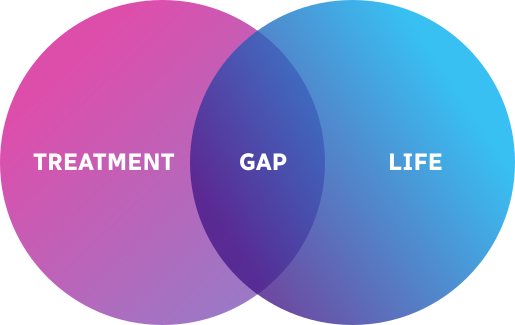
Filling the gap
Why This Matters Now
Why This Matters Now
Fatigue is consistently identified as a central quality-of-life pressure point in HER2+ metastatic mBC care. Especially for Enhertu patients.
As treatment pathways expand and patient volumes grow, these predictable decision moments will become more visible, and more consequential. The opportunity now is not to add more content, but to organise support around moments we can already anticipate.
Proactive synchronisation will be more sustainable than reactive management. That's true for patients, healthcare professionals, and the broader care system.
Fatigue is consistently identified as a central quality-of-life pressure point in HER2+ metastatic mBC care. Especially for Enhertu patients.
As treatment pathways expand and patient volumes grow, these predictable decision moments will become more visible, and more consequential. The opportunity now is not to add more content, but to organise support around moments we can already anticipate.
Proactive synchronisation will be more sustainable than reactive management. That's true for patients, healthcare professionals, and the broader care system.
Contact us
Contact us
As part of our commitment to delivering not just insights, but structured pathways forward, we have developed this framework as a practical translation of the research.
If aligned, we would welcome the opportunity to refine and operationalise this thinking in partnership with your team.
As part of our commitment to delivering not just insights, but structured pathways forward, we have developed this framework as a practical translation of the research.
If aligned, we would welcome the opportunity to refine and operationalise this thinking in partnership with your team.
As part of our commitment to delivering not just insights, but structured pathways forward, we have developed this framework as a practical translation of the research.
If aligned, we would welcome the opportunity to refine and operationalise this thinking in partnership with your team.
WeChat ID: CalebBlueChilli
WeChat ID: CalebBlueChilli
WeChat ID: CalebBlueChilli